
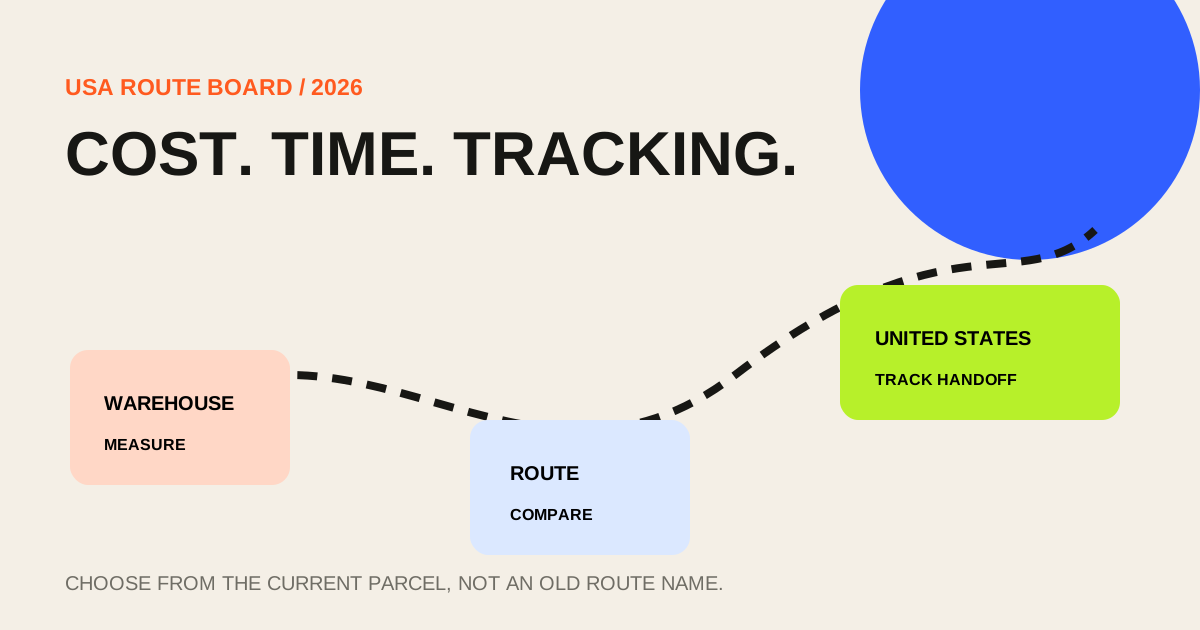
The best Sugargoo shipping line to the United States is not a permanent winner. It is the eligible option that fits your parcel, destination and risk tolerance when you submit it. A route praised in an old review may have different limits, rates or handoffs today. Start with the goods actually in the warehouse: packed weight, outside dimensions, product attributes, declared contents and destination ZIP code. Then compare the current options shown for that parcel.
1. Begin with the finished parcel, not a remembered route name
Separate certainty from estimates. Warehouse measurements may still change after packaging, and displayed delivery windows are not guarantees. Weather, export processing, flights, customs and the U.S. last-mile carrier can create variance. A useful route decision records the quote date, billing rule, estimated window, protection terms and restrictions. That record is stronger than choosing a line because its name sounds fast.
2. Calculate actual and volumetric weight before comparing cost
International lines may charge the greater of actual scale weight and volumetric weight. Volumetric weight converts parcel dimensions into a billing weight using the divisor stated for the route. Because divisors and rounding rules can differ, use the line's current calculation rather than a universal formula copied from another shipment. A light pair of shoes in a large box may cost more than a denser parcel with the same scale weight.
Model packaging before submission. Removing a retail box can reduce volume, but it can also reduce protection or collector value. Reinforcement, corner protection and waterproofing can add material and size. Ask which failure matters more for the item. Compare a protected configuration with a compact one rather than automatically stripping everything. If dimensions remain uncertain enough to change the route or budget, use the current rehearsal or pre-packing option available in the account before final payment.
3. Screen item attributes before building a mixed parcel
Route eligibility depends on what the parcel contains. Batteries, liquids, powders, magnets, fragrances, electronics and other sensitive attributes can narrow the available lines. Branded or unusual goods may also receive different treatment by carriers or destinations. Record attributes at product arrival instead of discovering them after several orders have been consolidated. One restricted item can remove an otherwise suitable route for the whole parcel.
When attributes conflict, compare splitting the item with excluding it. A split creates another minimum charge and another tracking chain, but it may preserve a better line for the remaining goods. Never hide or misdescribe an attribute to force a route. Carrier screening and customs inspection do not disappear because a form is vague. Accurate classification protects your evidence if a parcel is delayed or questioned.
4. Compare route cost with the service you actually receive
A lower quote can involve slower transport, more handoffs, different tracking detail, tighter compensation limits or fewer packaging choices. A higher quote may not be better if the item is low value and replaceable. Create a route table with five fields: billable weight, payable amount, estimated window, tracking pattern and protection eligibility. Add any destination or product restriction shown in the account.
Convert the amount to cost per kilogram only as a diagnostic. Minimum charges and volume can make that figure misleading. The correct comparison is total release cost for this parcel. If two options are close, choose based on the risk that matters: urgency, visibility, replacement difficulty or claim coverage. Preserve a screenshot of the route terms you accepted because labels and promotional prices can change after submission.
5. Read delivery time as a range of stages
An estimated transit window usually begins around carrier processing, not the day you bought the product. Your complete timeline includes seller dispatch to the warehouse, warehouse sign-in, QC review, consolidation, packing, parcel payment, export movement, customs, domestic handoff and final delivery. A seven-day line cannot make a seller ship to the warehouse faster. Keep the purchasing timeline separate from the international timeline so delays are assigned to the correct stage.
For time-sensitive orders, add buffers for every handoff and avoid treating the fastest displayed estimate as a deadline promise. Weekends, public holidays, capacity changes and customs review can extend the trip. If delivery by a fixed date is essential, the safest choice may be not ordering. Shipping estimates help compare routes; they cannot guarantee an event date.
6. Follow tracking by milestone and carrier handoff
Early tracking may show label creation, electronic information received or warehouse dispatch before a physical scan appears. International parcels can also pause between export and U.S. import scans while moving in a consolidated container or awaiting a handoff. A quiet period is not automatically loss. Compare the latest milestone with the route's normal stage and the support threshold shown for that line.
Save the Sugargoo parcel number, international tracking number and any later U.S. last-mile number. When a domestic carrier receives the parcel, track both records until the handoff is clear. If the status is unchanged beyond the route's support threshold, contact support with the parcel number, last scan, date and a concise request for trace or confirmation. Avoid opening multiple contradictory cases; one dated evidence file is easier to investigate.
7. Prepare accurate U.S. customs records without guessing
Describe contents in ordinary commercial language, with sensible quantities and values that reconcile with the parcel record. Do not use vague labels such as “gift” or “sample” merely to reduce attention. U.S. rules, carrier requirements and enforcement practices can change, and the buyer remains responsible for lawful import. Check the current guidance applicable to the goods and destination before submission, especially for regulated categories.
Keep the purchase record, payment evidence, item list, declared description, declared value and tracking together. If customs or the carrier asks a question, consistent documents are more useful than a reconstructed answer. This guide cannot determine duty or admissibility for a specific parcel. It provides a record system so the facts used at submission remain available later.
8. Protect the parcel and close the cost ledger after delivery
Protection should be chosen from the current route terms and the value you can document. Read coverage scope, exclusions, evidence requirements and reporting deadlines before paying. Photograph or record the warehouse packaging configuration when available. After delivery, preserve the shipping label and film the unopened parcel if damage, loss of contents or tampering would be difficult to prove later.
Close the shipment with actual freight, destination charges, delivery date and condition. Calculate delivered cost per usable item and note the largest variance from the estimate. If volume caused the overrun, change future packaging assumptions. If one sensitive product forced an expensive split, screen that attribute earlier. Each completed USA shipment should improve the next model instead of becoming another unexplained anecdote.
Build a simple exception plan before release. Decide who will receive the parcel, how missed delivery will be handled and how long you will wait after the last meaningful scan before asking for help. Confirm the delivery address in the parcel record, including apartment, suite and postal code. Address corrections after carrier acceptance can be limited or expensive. If the carrier offers delivery preferences, use only the official tracking path and avoid links from unexpected messages. Keeping the last-mile plan with the shipment record reduces both delay and phishing risk.
When the parcel arrives, compare its outside condition with the tracking and packaging record before opening. Photograph crushed corners, punctures, water marks or resealing. Open carefully on camera when the contents are valuable or a shortage would be difficult to prove. Count items against the warehouse parcel list before discarding packaging. If a problem exists, preserve labels, packaging and evidence until the route's support process is complete. A fast, factual report is stronger than a later reconstruction. Record the final delivery scan and recipient as well; those details can matter when a parcel is marked delivered but cannot be located. Note whether a neighbour, reception desk or parcel locker accepted it before reporting non-delivery to support.
Questions buyers ask after reading this guide
How much does Sugargoo shipping to the USA cost?
There is no fixed price. Cost depends on destination, billable weight, dimensions, product attributes, packaging and the routes currently available for the parcel.
How long does Sugargoo shipping to the USA take?
Use the current route estimate as a comparison range, not a guarantee. Add seller, warehouse, packing, customs and last-mile time to the full order timeline.
Why is my Sugargoo tracking not updating?
A parcel may be between scans, moving in a consolidated shipment or awaiting a carrier handoff. Compare the latest milestone with the route threshold before requesting a trace.
Should I remove shoe boxes to save money?
It can reduce volume, but it also reduces protection and collector value. Compare the dimensional saving with the item's fragility before choosing.
Can I avoid U.S. customs by changing the description?
No. Use accurate descriptions and values that match your parcel records. False or vague information can create legal, delay and claim problems.
Independent research based on Sugargoo's official public service, ordering, warehouse and shipping information reviewed September 17, 2026. Always confirm the current terms shown in your own account before paying or submitting a parcel.